
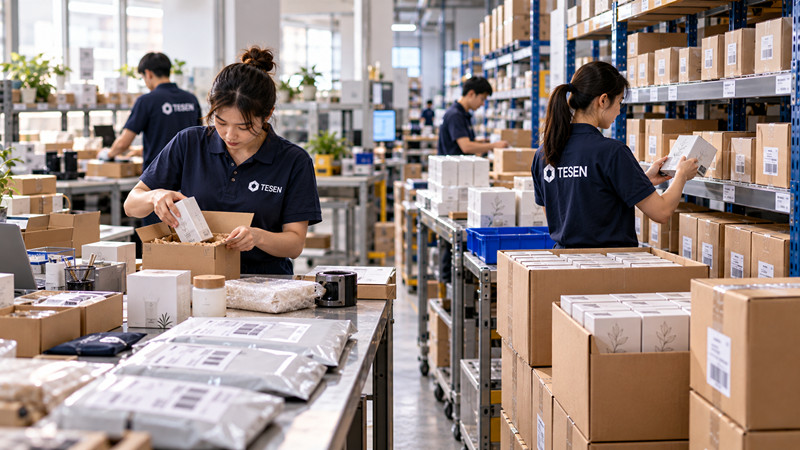
Dropshipping is often an effective way to start an ecommerce business.
A Shopify store can test products without purchasing large quantities of inventory in advance. When a customer places an order, the product can be purchased or processed through a supplier and shipped to the customer.
This reduces one of the biggest risks of starting an ecommerce store: committing capital to products before knowing whether customers actually want them.
But successful product testing eventually creates a different challenge.
What happens when the same product starts selling every day?
What happens when the brand repeatedly purchases the same SKU from the same supplier?
And what happens when customers begin expecting more consistent product quality, packaging, and order fulfillment?
At that point, the operating model that worked during product testing may begin creating unnecessary purchasing and processing work.
That does not mean dropshipping has failed. It may mean the product has entered a new stage of growth.
For many Shopify and DTC brands, dropshipping and stocked China 3PL fulfillment can be different stages of the same ecommerce business.
The key is knowing when a particular product is ready to move from order-by-order sourcing into managed inventory.
The biggest difference is not simply the warehouse.
It is when the inventory purchasing decision happens.
In a typical low-inventory dropshipping model, the workflow is:
Customer Order → Supplier Purchase or Processing → Product Preparation → Shipping
The store does not need to purchase significant inventory before customer demand exists.
This can be particularly useful for new products and uncertain markets.
With stocked fulfillment, the sequence changes:
Inventory Purchase → China 3PL Receiving → Inventory Storage → Customer Order → Pick and Pack → Shipping
The brand purchases selected inventory before individual customer orders arrive.
The fulfillment partner receives, stores, and processes orders against that inventory.
This introduces working-capital requirements and inventory risk.
But it can also provide greater control over purchasing, inventory availability, product preparation, and fulfillment processing.
The real decision is whether the benefits of holding inventory now justify the additional commitment.
| Decision factor | Order-by-Order Dropshipping | Stocked China 3PL |
|---|---|---|
| Inventory purchasing | After or in response to customer orders | Before customer orders |
| Upfront inventory investment | Generally lower | Higher |
| Inventory risk | Lower stock commitment | Risk of unsold or slow-moving stock |
| Supplier processing | May be required for each order | Purchasing handled through replenishment |
| Order processing | May depend on supplier availability | Can begin from available warehouse stock |
| Product consistency | Depends on supplier and purchasing process | More opportunity for batch-level controls |
| Custom packaging | May be limited by supplier workflow | Can be prepared with managed inventory |
| Inventory planning | Less advance stock forecasting | Requires SKU-level replenishment planning |
| Best suited for | Product testing and uncertain demand | Proven products with more predictable demand |
Neither model is automatically better.
Dropshipping protects flexibility when demand is uncertain.
Stocked fulfillment becomes more attractive when demand is sufficiently predictable and the brand benefits from greater operational control.
One of the clearest signals is consistent SKU-level demand.
During product testing, sales may fluctuate significantly.
A new product might generate:
Monday: 2 orders
Tuesday: 11 orders
Wednesday: 1 order
Thursday: 0 orders
This pattern does not provide strong evidence for purchasing a large quantity of inventory.
The store is still learning whether demand is sustainable.
Dropshipping allows the business to continue testing without making a substantial stock commitment.
Now imagine that the same product begins generating consistent orders over several weeks or months.
The brand has more information about:
Average daily sales
Weekly demand patterns
Advertising performance
Customer feedback
Product returns
Supplier reliability
Product profitability
The SKU is no longer simply an experiment.
It has become a repeatable part of the business.
This does not eliminate inventory risk, but it makes that risk easier to estimate.
The strongest signal for moving to stocked fulfillment is not a temporary sales spike. It is repeatable demand.
Another signal appears in purchasing operations.
Consider a store that repeatedly purchases the same product.
On Monday, it buys eight units.
On Tuesday, it buys another twelve.
Over the following week, it purchases seventy more.
The brand is repeating similar supplier transactions because customer orders continue arriving.
At this stage, it is worth asking:
Are we still gaining enough value from purchasing this product one order at a time?
When demand becomes predictable, batch purchasing may simplify supplier coordination.
Instead of repeating:
Customer Order → Supplier Purchase → Supplier Processing
the business can move toward:
Batch Purchase → China Inventory → Customer Orders → Inventory Replenishment
This does not mean every product should be purchased in bulk.
It means the brand can evaluate whether established SKUs deserve a different purchasing model from products still being tested.
Order-by-order dropshipping often introduces an upstream processing step after the customer has already placed an order.
The supplier may need to confirm stock, process a purchase, prepare the product, or arrange delivery to the fulfillment operation.
For new products, this trade-off may be acceptable.
But when the same SKU sells consistently, repeating those steps can create avoidable processing time.
With inventory already available at a China 3PL, the workflow can become:
Customer Order → Available Inventory → Pick → Pack → Ship
The purchasing and receiving steps have already happened.
This can make warehouse processing more predictable.
However, an important distinction remains:
China 3PL fulfillment does not automatically make international transportation faster.
The benefit is that an order can begin fulfillment from available stock without waiting for a new supplier transaction.
Cross-border transit, customs clearance, and final delivery still depend on the shipping service and destination market.
Product testing asks:
Will customers buy this product?
Growing a brand introduces another question:
Can we deliver the same product consistently?
When a store repeatedly purchases products order by order, it may have less control over production batches, product variants, packaging changes, and supplier substitutions.
For a proven SKU, the brand may want a more standardized process:
Supplier → Batch Purchase → Receiving → Agreed QC → Approved Inventory → Fulfillment
Holding inventory can create an opportunity to verify selected products before customer orders depend on them.
The level of quality control should reflect the product category and the agreed inspection scope.
Not every product requires the same inspection procedure.
The important change is that inventory can be checked and prepared before being released for fulfillment.
For brands developing repeat customers, product consistency can become increasingly important to the customer experience.
During early product testing, packaging is often a lower priority.
The business may focus on finding products that customers want to buy.
Investing heavily in branded boxes, inserts, or accessories for an unproven product may create unnecessary cost.
But when a product becomes a stable seller, the brand may want:
Custom packaging
Branded pouches
Printed inserts
Product labels
Gift sets
Accessories
Kitting
More consistent product presentation
These activities can be easier to standardize when products and packaging materials are already stored in a managed fulfillment operation.
For example, a Shopify skincare brand may initially ship individual products using standard supplier packaging.
After demand becomes stable, it may introduce a starter kit containing the main product, an applicator, and a branded pouch.
A China 3PL can support the receiving and preparation of those components according to the agreed fulfillment workflow.
The decision is no longer only about shipping products.
It is about building a repeatable branded customer experience.
Moving to stocked fulfillment introduces a new responsibility: inventory ownership.
The brand must decide:
How many units to purchase
How much capital to commit
When to reorder
How much safety stock to maintain
Which SKUs justify stocking
What happens if sales decline
This is why higher order volume alone is not enough to justify the transition.
A sudden viral product can generate substantial sales without creating predictable future demand.
Purchasing several months of inventory after a short-lived spike may create excess stock.
A more useful approach is to evaluate:
Sales Velocity + Supplier Lead Time + Demand Variability + Safety Stock Requirements
For example, a brand selling a relatively stable quantity of one SKU over several months may be able to estimate its next replenishment requirement.
The forecast does not need to be perfect.
But it should be reliable enough to support an inventory commitment that the business can afford.
One reason brands consider stocked fulfillment is the possibility of improving purchasing efficiency.
A supplier may offer different pricing for individual units and larger purchase quantities.
Batch purchasing may also reduce repeated supplier processing.
However, the correct comparison should include more than the product purchase price.
Consider a hypothetical product with the following assumptions.
| Cost factor | Order-by-order purchasing | Batch purchasing |
|---|---|---|
| Product cost per unit | $8.00 | $7.20 |
| Monthly sales | 300 units | 300 units |
| Monthly product purchasing cost | $2,400 | $2,160 |
| Upfront inventory commitment | Lower | Higher |
| Inventory storage | Depends on model | Required |
| Receiving and preparation | Depends on model | May apply |
| Unsold inventory risk | Generally lower | Higher |
In this simplified example, the product purchasing difference is $240 per month for 300 units.
But that is not necessarily the final saving.
The stocked model may introduce receiving, storage, financing, QC, or other handling costs.
It may also create losses if demand falls and inventory remains unsold.
The brand should compare the total operating economics using actual supplier quotations and fulfillment charges.
A lower bulk purchase price only creates value when the savings and operational benefits justify the inventory commitment.
A common question is:
How many daily orders do I need before moving to a China 3PL?
There is no universal answer.
Consider two Shopify stores.
Store A
Processes 100 orders per day across 80 products with unpredictable demand.
Store B
Processes 40 orders per day, with most sales concentrated in two stable bestsellers.
Store B may have a stronger case for stocking selected inventory, despite having fewer total orders.
Why?
Because the inventory decision should be made at the SKU level.
The important factors include:
Repeatable demand
Stable supplier availability
Purchasing frequency
Product margins
Working-capital capacity
Inventory turnover
Replenishment lead time
Packaging and QC requirements
A store does not need to wait until every product is successful before considering a 3PL.
It can begin by evaluating the products that already demonstrate consistent demand.
Suppose a Shopify store sells 20 products.
Its catalog includes:
| Product group | Number of SKUs | Demand pattern |
|---|---|---|
| Proven bestsellers | 3 | Stable |
| Emerging products | 5 | Promising but still developing |
| Testing products | 12 | Uncertain |
| Total | 20 |
Moving all 20 SKUs into stocked inventory could create unnecessary risk.
A more selective approach may be appropriate.
These products may justify stocked China 3PL fulfillment.
The brand has enough sales history to evaluate purchase quantities and replenishment requirements.
These products may remain in dropshipping or move into small trial inventory batches.
The decision depends on demand confidence and supplier terms.
These products can continue using a low-inventory model until demand becomes clearer.
This creates a hybrid operating structure.
Proven SKUs → Stocked China Fulfillment
New or Uncertain SKUs → Dropshipping
The brand can use different fulfillment models for different stages of product maturity.
The transition does not need to happen all at once.
A controlled process can reduce operational disruption.
Review sales history and identify products with repeatable demand.
Avoid selecting products based only on one short-term sales spike.
Check product availability, supplier lead times, unit pricing, minimum order quantities, and product consistency.
Use expected demand, supplier replenishment time, and the amount of working capital the business is prepared to commit.
An initial batch can help validate the stocked model before making larger purchases.
Confirm how the 3PL receives inventory, verifies quantities, identifies SKUs, and records available stock.
Determine which checks or preparation activities are needed before the products become available for fulfillment.
Confirm how orders are assigned to the stocked inventory and how fulfillment status and tracking updates return to Shopify.
If the store continues using dropshipping for other SKUs, clarify how the two workflows are separated.
Process a controlled number of customer orders and review inventory accuracy, picking, packaging, and tracking.
Monitor actual sales velocity, remaining stock, supplier replenishment time, and any fulfillment exceptions.
Use the results to decide whether to increase inventory or transition additional SKUs.
The objective is not to switch models as quickly as possible.
It is to make the transition based on operational evidence.
A hybrid model can allow the same store to continue testing products while holding inventory for established winners.
For example:
| Product | Fulfillment model |
|---|---|
| Bestseller A | Stocked China 3PL |
| Bestseller B | Stocked China 3PL |
| Emerging Product C | Small trial inventory |
| New Product D | Order-by-order dropshipping |
| New Product E | Order-by-order dropshipping |
This model can preserve flexibility.
However, the brand should clarify how orders are processed when customers purchase products using different fulfillment workflows.
Important questions include:
Which system or supplier receives each order?
How are stocked SKUs identified?
How are inventory quantities updated?
What happens when an order contains both stocked and non-stocked products?
Will the order require separate shipments?
How are tracking numbers returned to Shopify?
How are cancellations and address changes handled?
These details matter because a hybrid model introduces operational complexity even as it reduces inventory commitment.
The fulfillment setup should be designed before order volume increases.
Moving to a 3PL is not always the right next step.
Continuing dropshipping may be preferable when:
Product demand is still uncertain.
Sales depend heavily on short-term advertising trends.
Product variants change frequently.
The brand lacks sufficient working capital.
Supplier minimum order quantities are too high.
Inventory turnover cannot be estimated reliably.
The product is still being tested across markets.
In these situations, avoiding advance inventory purchases may be more valuable than the operational benefits of stocked fulfillment.
A brand can continue gathering sales data and reassess the decision later.
Dropshipping remains a legitimate operating model for products that have not yet justified inventory ownership.
Before moving a SKU into stocked China fulfillment, evaluate the following questions.
| Decision area | Question |
|---|---|
| Demand | Does the SKU have repeatable sales rather than a temporary spike? |
| Supplier | Is the product available from a reasonably reliable supplier? |
| Purchasing | Are we repeatedly buying the same SKU? |
| Processing | Is order-by-order supplier processing creating avoidable delays? |
| Economics | Do purchasing and operational benefits justify storage and inventory costs? |
| Branding | Would managed inventory support more consistent packaging or product preparation? |
| Inventory risk | Can we afford the initial stock commitment? |
| Replenishment | Can we estimate when additional inventory will be needed? |
| Shopify operations | Can the stocked SKU be routed and tracked correctly? |
If several of these conditions are met, the SKU may be a suitable candidate for a controlled stocked-fulfillment trial.
The decision should still reflect the brand's product economics and risk tolerance.
TESEN is a China-based Ecommerce Supply Chain & Fulfillment Partner for Shopify and DTC brands.
We support ecommerce businesses at different stages of growth, including brands that are still testing products and brands beginning to hold inventory for proven SKUs.
For a new or growing store, the initial model may involve sourcing products and processing orders without committing to large inventory quantities.
As demand becomes more predictable, selected products can move into a stocked China fulfillment workflow.
Depending on the agreed service scope, TESEN supports:
Product sourcing from China
Supplier coordination
Inventory purchasing support
Warehouse receiving
Quality control where required
Inventory storage and management
Custom packaging and kitting
Shopify order integration
Order picking and packing
International shipping
A brand can continue testing new products while holding inventory for established bestsellers.
Not every SKU needs to transition at the same time.
If your Shopify store is repeatedly selling the same products and you are considering stocked inventory, TESEN can help review the operational requirements.
Useful information includes:
Product categories and SKU count
Average daily or monthly orders
Sales volume for the proposed stocked SKUs
Supplier details
Product dimensions and weights
Main destination countries
Packaging requirements
Expected inventory quantities
These details help evaluate whether a low-inventory model, stocked fulfillment, or a combination is appropriate.
Learn more about TESEN: https://www.tesenscm.com
Dropshipping is useful for testing products without substantial advance inventory commitments.
Stocked China 3PL fulfillment can become more attractive when individual SKUs develop repeatable demand.
Repetitive supplier purchasing may indicate that batch purchasing deserves evaluation.
Holding inventory can reduce order-by-order supplier processing but does not automatically shorten international transit.
Managed inventory can support more standardized QC, packaging, and fulfillment.
Moving to stocked fulfillment introduces working-capital requirements and inventory risk.
There is no universal daily order threshold for the transition.
Proven bestsellers may move to stocked fulfillment while new products continue using dropshipping.
A controlled trial can help validate the economics and operational process.
The right fulfillment model should reflect the maturity of each SKU, not simply the size of the store.
A store should consider stocked China 3PL fulfillment when selected SKUs show repeatable demand, purchasing becomes repetitive, inventory risk is manageable, and the business benefits from greater control over product preparation and order processing. There is no universal order-volume threshold.
There is no fixed number that applies to every brand. A store with relatively low but stable demand for a few products may be a stronger candidate than a high-volume store with many unpredictable SKUs. Evaluate SKU-level demand and the economics of holding inventory.
Yes. A hybrid model can keep new products in a low-inventory dropshipping workflow while proven products are stored and fulfilled from a China 3PL. The brand should confirm order routing, inventory synchronization, and mixed-SKU order handling.
It can reduce processing time when products are already stocked and ready for fulfillment. However, international transit time still depends on the destination and shipping service. Stocked China fulfillment does not automatically provide local-warehouse delivery speeds.
No. Bulk purchasing may reduce unit costs, but it also introduces inventory storage, receiving, financing, and unsold-stock risks. Brands should compare total operating costs and expected inventory turnover.
Products with stable demand, reliable suppliers, sufficient sales history, and clear operational benefits are usually the strongest candidates. New or highly unpredictable products may be better suited to continued dropshipping.
The main risks include excess inventory, inaccurate demand forecasts, slow-moving stock, working-capital commitments, and replenishment mistakes. Starting with selected SKUs and controlled inventory quantities can help limit exposure.
Some China 3PL providers support branded packaging, inserts, product sets, and kitting. The brand should confirm preparation requirements, packaging minimum quantities, inventory handling, and applicable service charges.
Dropshipping solves an important early-stage ecommerce problem:
How can we test demand without purchasing too much inventory?
Stocked China 3PL fulfillment addresses a different problem:
How can we manage proven products more consistently once demand becomes predictable?
The transition between these models should not be treated as abandoning dropshipping.
It can be a natural development in the product lifecycle.
For many Shopify and DTC brands, the most practical strategy is not choosing one fulfillment model for every product.
It is identifying which SKUs are ready for managed inventory and which should remain in a flexible testing model.
Dropshipping and China 3PL fulfillment can work together as an ecommerce business grows.
TESEN is a China-based Ecommerce Supply Chain & Fulfillment Partner for Shopify and DTC brands.
Our core focus is ecommerce fulfillment, supported by product sourcing, supplier management, quality control, inventory planning and storage, custom packaging, and international shipping.
We help ecommerce brands connect China-side product sourcing with managed inventory and Shopify fulfillment, supporting both product testing and the transition to stocked fulfillment as demand develops.
Source Your Products and Start Dropshipping
 IPv6 network supported