Join us today by completing the form below to enjoy the endless benefits of TesenFulfill. Click on submit after filling the form, and we would get back to you with all the information you need.
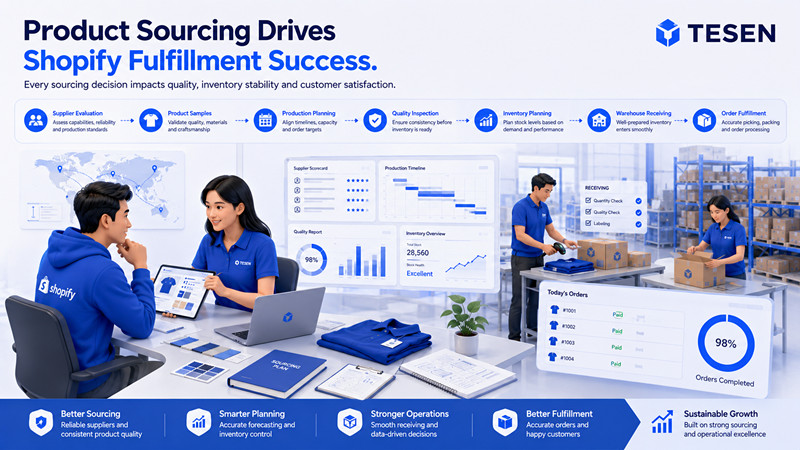
How Product Sourcing Impacts Shopify Fulfillment Performance Many Shopify brands believe fulfillment begins when a customer places an order. In reality, fulfillment starts much earlier. It begins with product sourcing. The manufacturers you choose, the suppliers you work with, and the sourcing decisions you make all influence fulfillment performance long before products enter a warehouse. At TESEN...
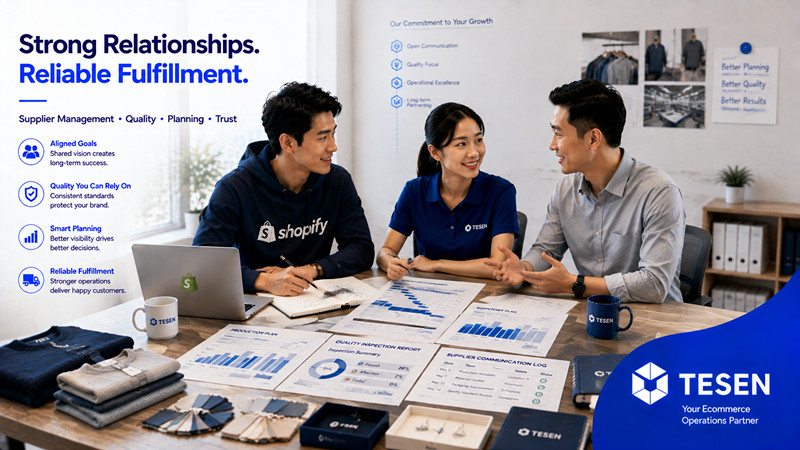
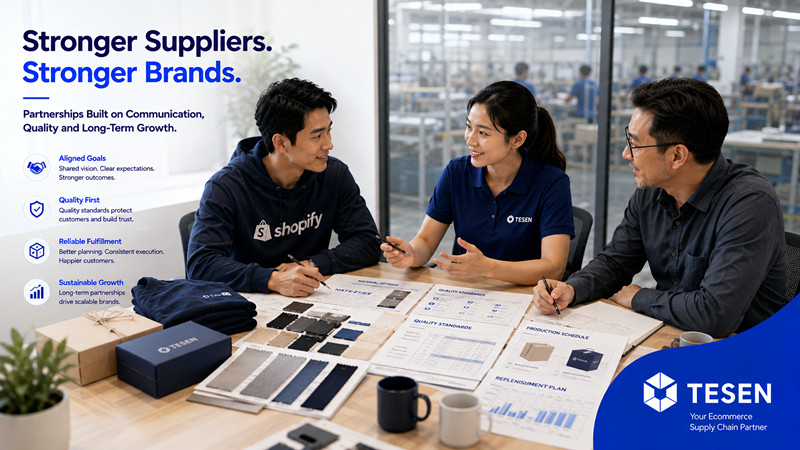
For many ecommerce founders, choosing a supplier often begins with one question: "Who offers the lowest price?" Product cost is important. However, as Shopify brands grow, many discover that supplier relationships create far greater long-term value than small differences in pricing. At TESEN, we've observed that successful ecommerce businesses are rarely built on the cheapest suppliers. They are b...
For many ecommerce founders, choosing a supplier starts with comparing prices. Who can manufacture the product for less? Who offers the lowest MOQ? Who provides the biggest discount? Price matters. But as Shopify brands grow, they often discover that the lowest-priced supplier is not necessarily the lowest-cost supplier. Production delays, inconsistent quality, poor communication, and unexpected i...
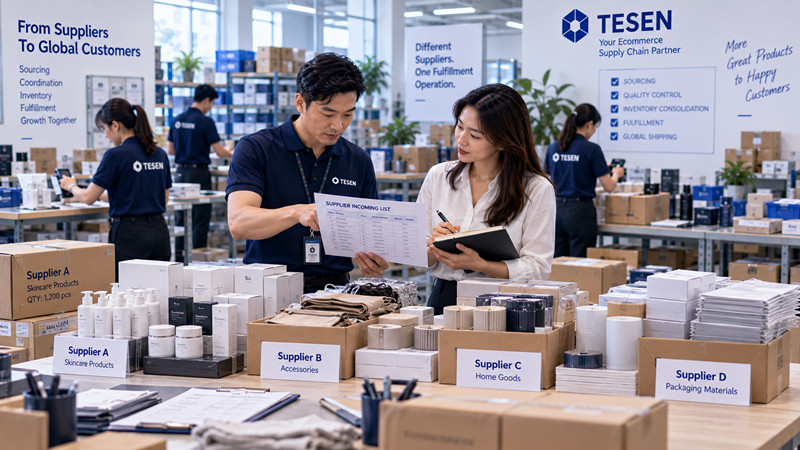
For many ecommerce brands, product sourcing and fulfillment begin as separate decisions. A sourcing agent or factory helps find and manufacture the product. A warehouse stores inventory and ships customer orders. At a small scale, this can work. But as Shopify and DTC brands grow, the gap between sourcing and fulfillment often becomes an operational weakness. Production timelines change. Supplier ...
For many Shopify brands, the first reason to look for a fulfillment agent is simple: There are too many orders to manage manually. The brand needs someone to receive inventory, store products, pick and pack orders, and arrange shipping. At an early stage, that may be enough. But as an ecommerce business grows, fulfillment becomes connected to much more than order processing. Inventory needs to be ...
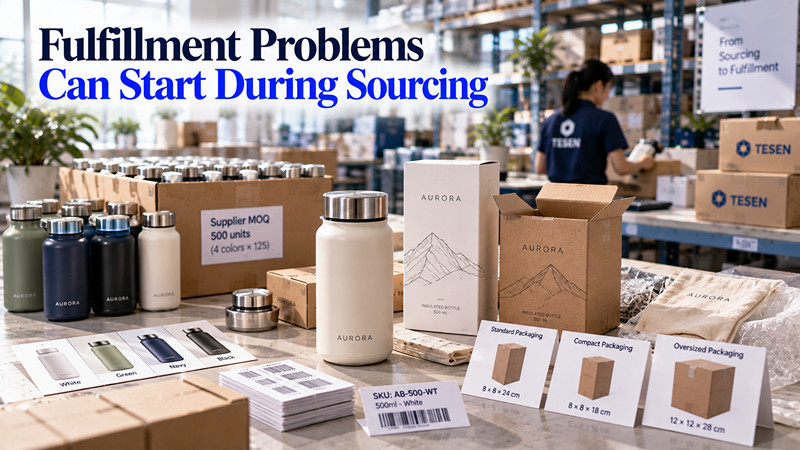
Product sourcing is often treated as a purchasing decision. Find the right product. Compare suppliers. Negotiate the price. Confirm the order. Then send the products to a warehouse and let fulfillment take over. That sequence looks logical. But for growing ecommerce brands, many of the decisions that determine fulfillment performance are actually made before production begins. A slightly different...

 IPv6 network supported