Join us today by completing the form below to enjoy the endless benefits of TesenFulfill. Click on submit after filling the form, and we would get back to you with all the information you need.
For many Shopify brands, the first reason to look for a fulfillment agent is simple: There are too many orders to manage manually. The brand needs someone to receive inventory, store products, pick and pack orders, and arrange shipping. At an early stage, that may be enough. But as an ecommerce business grows, fulfillment becomes connected to much more than order processing. Inventory needs to be ...
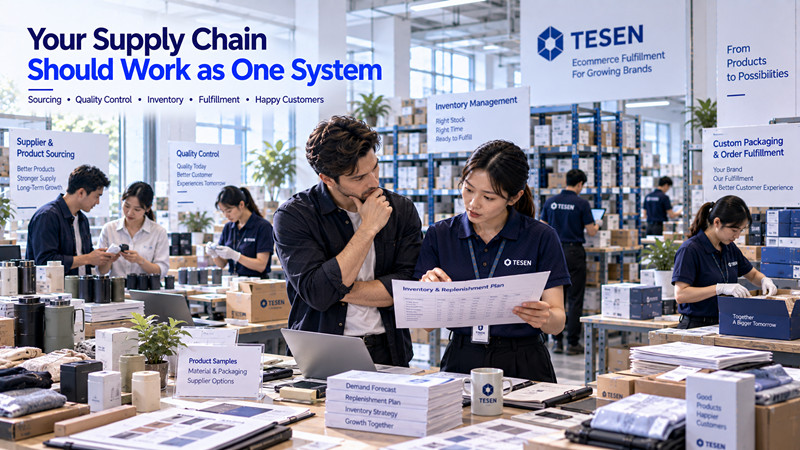
When a Shopify brand is small, supply chain management can be surprisingly simple. The founder talks directly with the supplier. Inventory is tracked in a spreadsheet. Products are sent to a warehouse. Another provider handles fulfillment. When something changes, the founder connects the dots manually. At 10 or 20 orders per day, this can work. But as the business grows, the same structure often b...
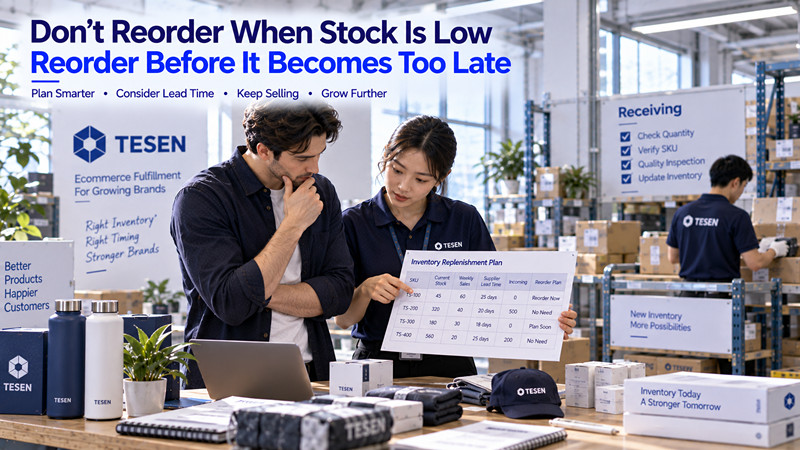
One of the most common inventory questions for growing ecommerce brands sounds simple: When should we reorder? A common answer is: When inventory gets low. But by the time inventory looks low inside Shopify, the most important replenishment deadline may already have passed. The supplier still needs time to produce the next batch. Products may need to move from the supplier to the fulfillment cente...
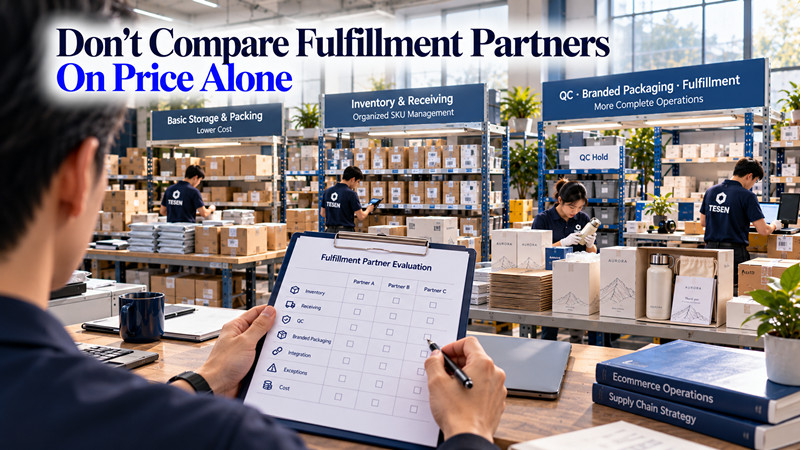
Choosing an ecommerce fulfillment partner often begins with a spreadsheet. One provider charges less for pick and pack. Another offers cheaper storage. A third has a lower shipping rate. Those numbers are easy to compare, which is why they often dominate the decision. But fulfillment partnerships rarely become difficult because one provider charged slightly more per order. The bigger problems usua...
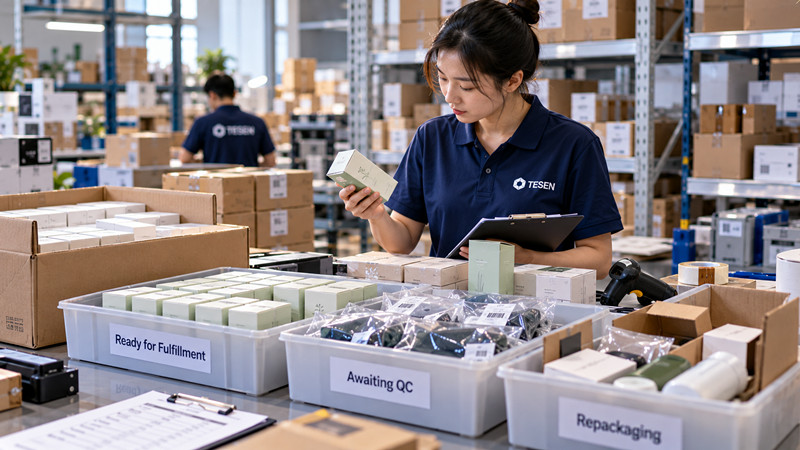
A Shopify brand checks its warehouse inventory and sees 500 units in stock. It is tempting to assume that all 500 units are ready for customer orders. But inside the fulfillment operation, those numbers may be very different. Some products may have arrived but are still awaiting receiving verification. Others may be pending quality control, reserved for existing orders, held because of quality con...
Kitting is often described as a packaging service. Take several products, put them together, add a branded box or insert, and ship them as a set. That description is not wrong. But it misses one of the most important operational effects of kitting. When a Shopify brand combines separate products into a pre-built kit, the fulfillment operation may also change how inventory is tracked, alloca...
Choosing a third-party logistics (3PL) provider in China can seem straightforward. You need a warehouse to receive products, store inventory, pick and pack orders, and ship parcels to customers. So you request quotations from several China 3PL companies and compare storage fees, handling charges, and international shipping rates. But for a Shopify or DTC brand sourcing products from Chinese suppli...
Dropshipping is often an effective way to start an ecommerce business. A Shopify store can test products without purchasing large quantities of inventory in advance. When a customer places an order, the product can be purchased or processed through a supplier and shipped to the customer. This reduces one of the biggest risks of starting an ecommerce store: committing capital to products before kno...



 IPv6 network supported