Join us today by completing the form below to enjoy the endless benefits of TesenFulfill. Click on submit after filling the form, and we would get back to you with all the information you need.
How Shopify Operations Change from 20 to 100 Orders Per Day Many Shopify founders dream about reaching 100 orders per day. In the early stages of building an ecommerce business, success often seems straightforward: Generate more traffic Improve conversion rates Increase advertising performance But as many growing brands discover, the biggest challenges often begin after sales start accelerating. A...
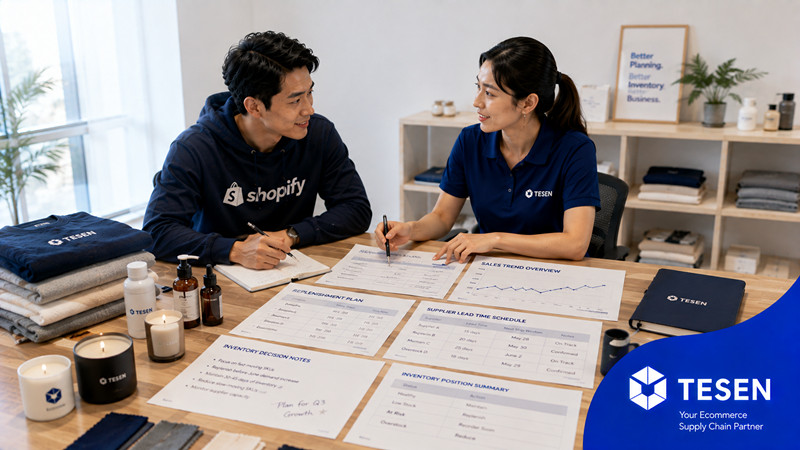
When ecommerce brands discuss inventory planning, the conversation usually focuses on forecasting sales. Questions like these often dominate the discussion: How many units should we order? When should we replenish stock? How can we avoid overstocking? These are important questions. But they are only part of the picture. At TESEN, we've found that successful inventory planning isn't simply about pr...
Many ecommerce brands invest heavily in improving customer experience. They redesign websites. Optimize checkout pages. Expand customer support teams. These investments are important. However, customer experience is often shaped long before a customer contacts support or receives a package. At TESEN, we've found that the strongest customer experiences are created by better operational decisions ma...
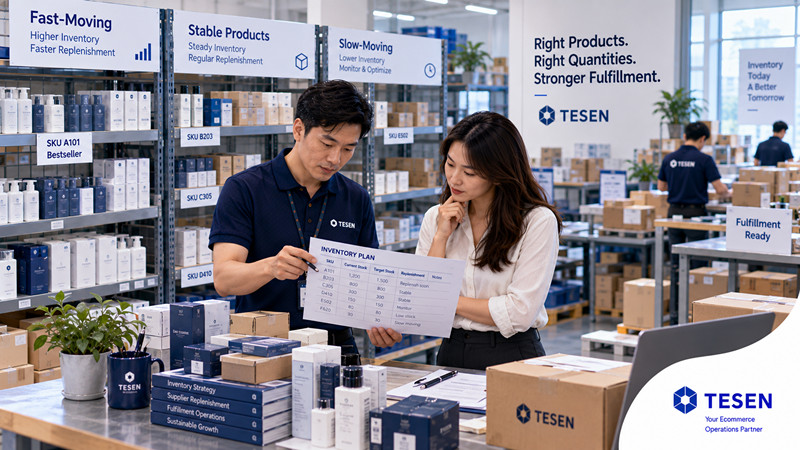
When ecommerce brands think about inventory planning, the conversation usually starts with numbers. How much inventory should we order? When should we replenish stock? How much safety stock should we keep? How can we avoid overstocking? These are important questions. But they do not fully explain why inventory planning matters. For growing Shopify brands, inventory planning directly affects whethe...
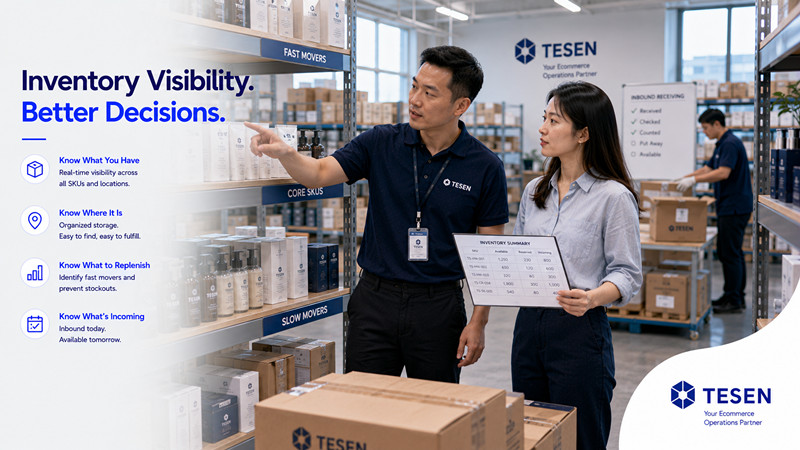
When growing ecommerce brands experience inventory problems, one of the most common reactions is simple: Buy more stock. More inventory appears to provide more protection against stockouts, supplier delays, and unexpected demand. Sometimes it does. But increasing inventory without improving visibility can create a different set of problems. A Shopify brand may own thousands of units and still stru...
As ecommerce brands grow, inventory storage often appears to be a simple capacity problem. More products require more shelves. More orders require more inventory. More inventory requires a larger warehouse. But warehouse capacity is only one part of the problem. A Shopify brand can have thousands of units in storage and still experience stockouts, excess inventory, poor replenishment decisions, an...
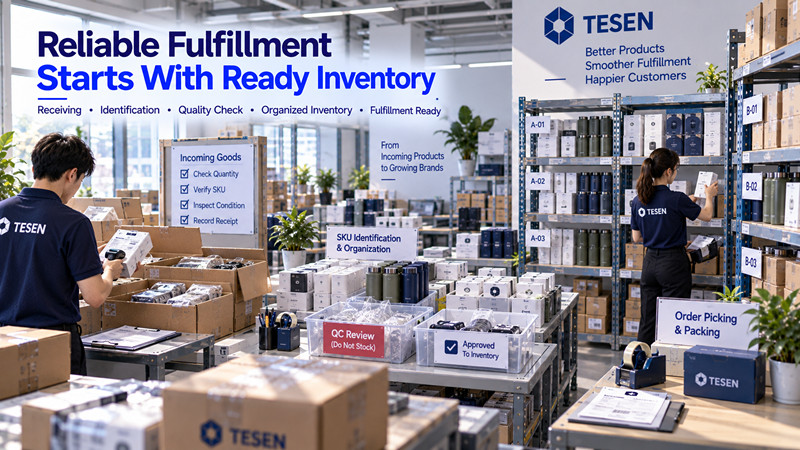
When ecommerce brands think about fulfillment performance, they usually focus on what happens after an order is placed. How quickly is the order picked? Was the correct product packed? When was the parcel shipped? These things matter. But reliable ecommerce fulfillment begins much earlier. Before an order can be picked accurately, the right inventory must already be received, identified, visible, ...
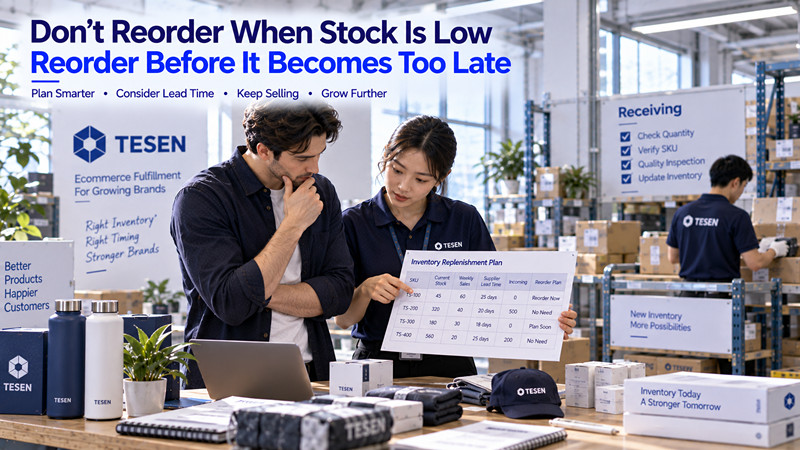
One of the most common inventory questions for growing ecommerce brands sounds simple: When should we reorder? A common answer is: When inventory gets low. But by the time inventory looks low inside Shopify, the most important replenishment deadline may already have passed. The supplier still needs time to produce the next batch. Products may need to move from the supplier to the fulfillment cente...




 IPv6 network supported