Join us today by completing the form below to enjoy the endless benefits of TesenFulfill. Click on submit after filling the form, and we would get back to you with all the information you need.
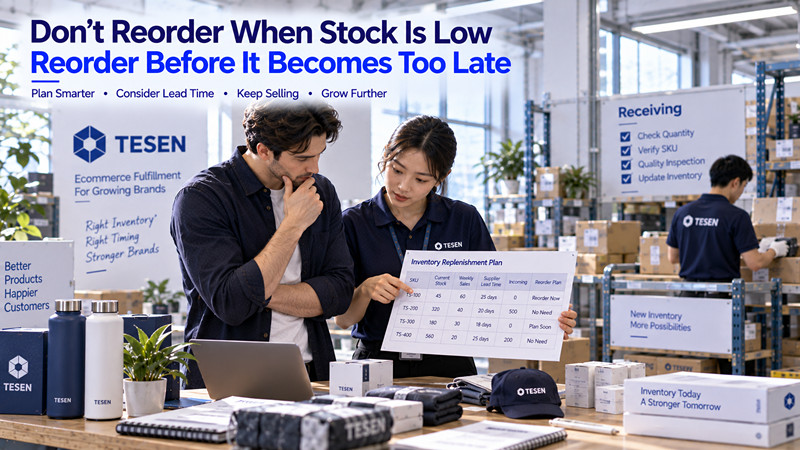
One of the most common inventory questions for growing ecommerce brands sounds simple: When should we reorder? A common answer is: When inventory gets low. But by the time inventory looks low inside Shopify, the most important replenishment deadline may already have passed. The supplier still needs time to produce the next batch. Products may need to move from the supplier to the fulfillment cente...
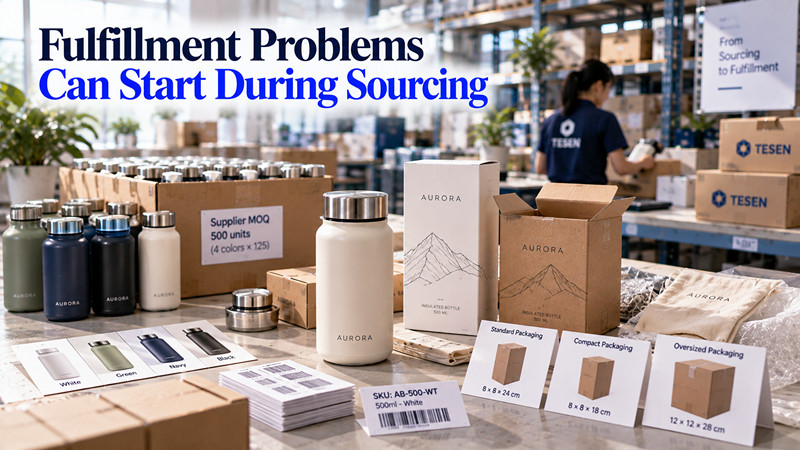
Product sourcing is often treated as a purchasing decision. Find the right product. Compare suppliers. Negotiate the price. Confirm the order. Then send the products to a warehouse and let fulfillment take over. That sequence looks logical. But for growing ecommerce brands, many of the decisions that determine fulfillment performance are actually made before production begins. A slightly different...
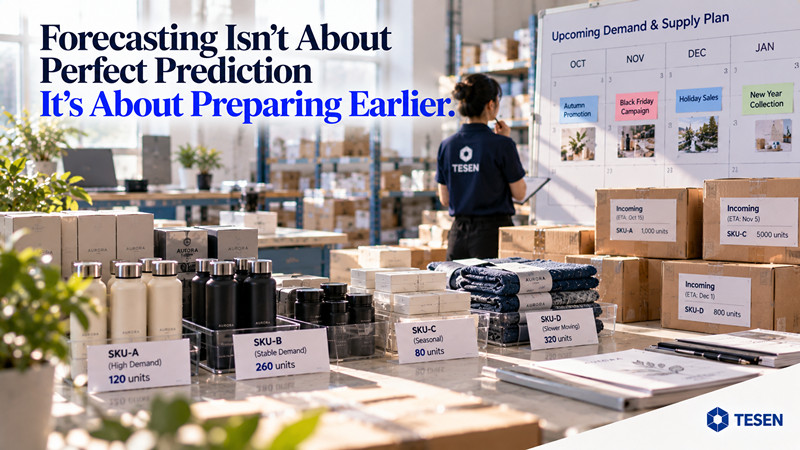
Inventory forecasting is often misunderstood. Many ecommerce brands think forecasting means trying to predict exactly how many units they will sell next week, next month, or next quarter. In practice, ecommerce demand rarely behaves that predictably. Advertising campaigns can accelerate sales. Influencer exposure can create sudden demand. Seasonality affects different products differently. Supplie...
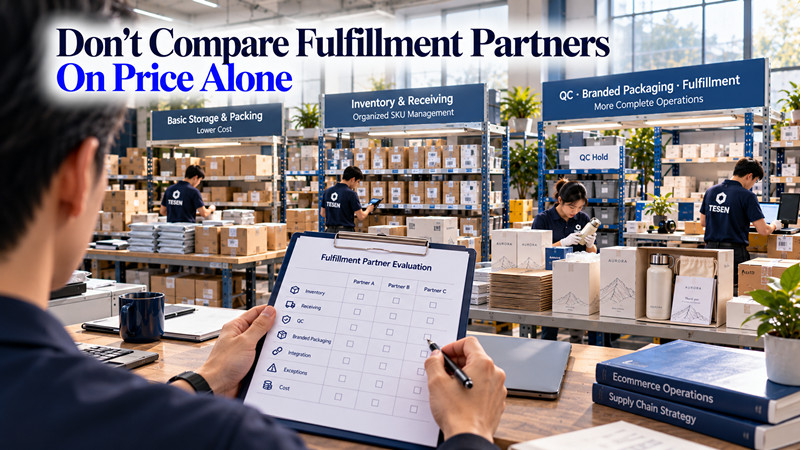
Choosing an ecommerce fulfillment partner often begins with a spreadsheet. One provider charges less for pick and pack. Another offers cheaper storage. A third has a lower shipping rate. Those numbers are easy to compare, which is why they often dominate the decision. But fulfillment partnerships rarely become difficult because one provider charged slightly more per order. The bigger problems usua...
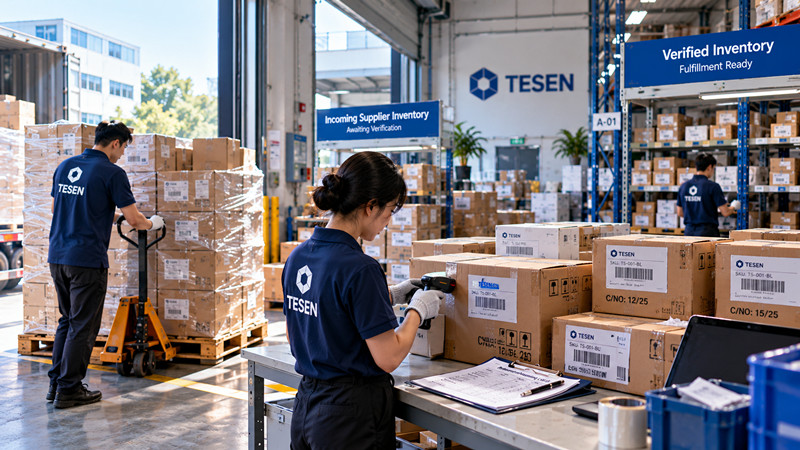
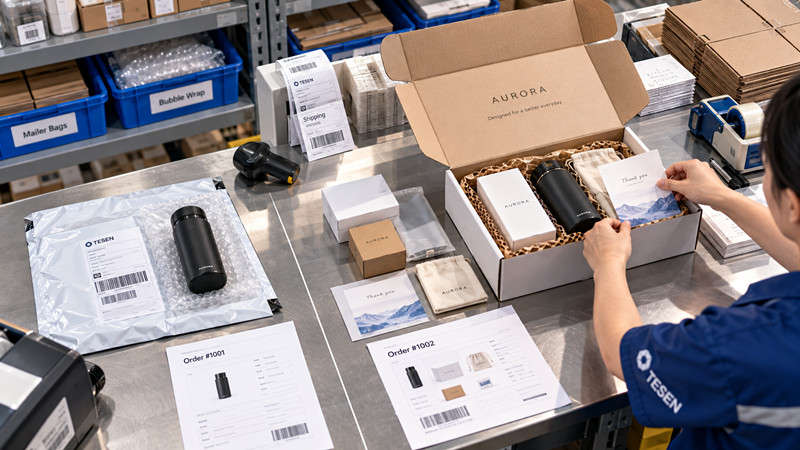
Many ecommerce brands assume fulfillment begins when products arrive at a warehouse in China. The supplier completes production. Cartons are delivered. The warehouse receives the goods. Then customer orders can begin shipping. But for growing Shopify and DTC brands, the process is rarely that simple. A product can be finished at the factory without being ready for fulfillment. SKU labels may not m...
When ecommerce brands compare fulfillment providers, one number often receives the most attention: How much does pick and pack cost per order? It is a reasonable starting point. Pick-and-pack fees are easy to understand, easy to compare, and often prominently displayed in fulfillment quotations. But they rarely represent the full cost of an ecommerce fulfillment operation. A Shopify brand shipping...
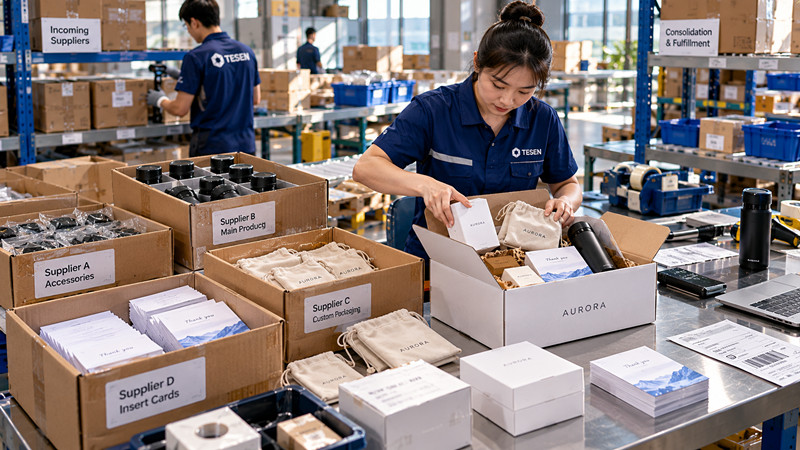
A growing ecommerce brand rarely depends on just one supplier forever. One Chinese manufacturer produces the main product. Another supplies accessories. A packaging company makes branded boxes or pouches. A separate printing supplier produces instruction cards or promotional inserts. From a purchasing perspective, these are independent supplier relationships. From the customer's perspective, they ...
Should your Shopify brand fulfill orders directly from China or move inventory into an overseas warehouse? For growing ecommerce businesses, this is rarely a simple choice between two warehouse locations. A brand selling a predictable bestseller in the United States has different fulfillment requirements from a brand testing 20 products across the US, UK, Europe, and Australia. The first may benef...

 IPv6 network supported