Join us today by completing the form below to enjoy the endless benefits of TesenFulfill. Click on submit after filling the form, and we would get back to you with all the information you need.
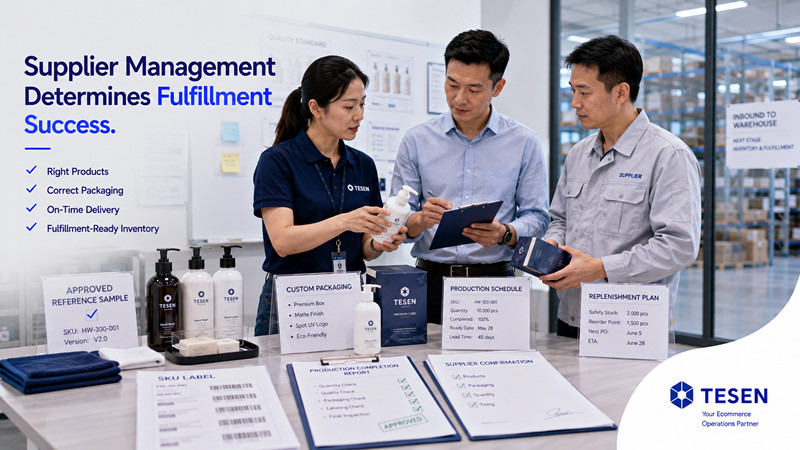
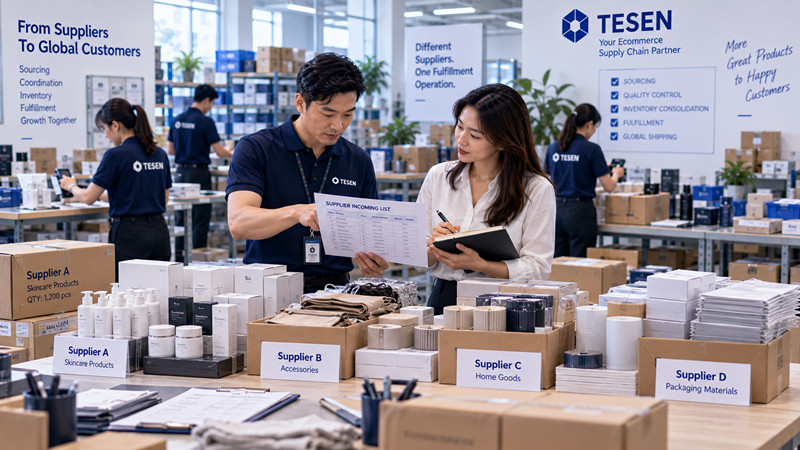
Many ecommerce brands think fulfillment begins when a customer places an order. The customer completes checkout. The warehouse receives the order. The product is picked, packed, and shipped. From the customer's perspective, that is where fulfillment begins. Operationally, however, reliable fulfillment starts much earlier. Before a product ever reaches the warehouse, suppliers have already influenc...
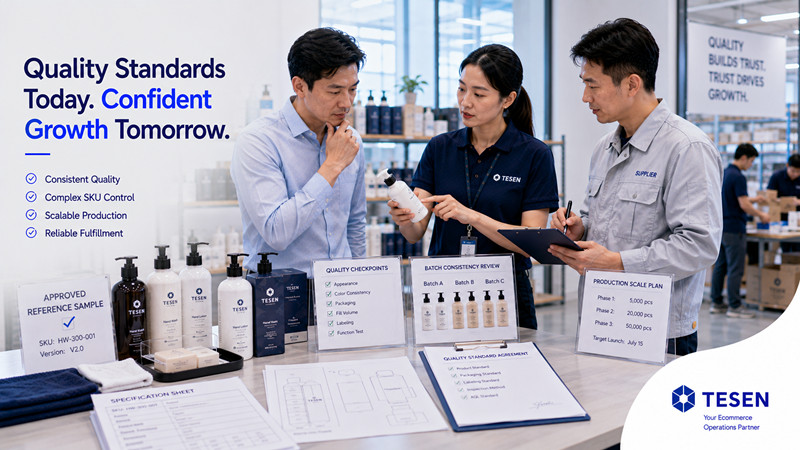
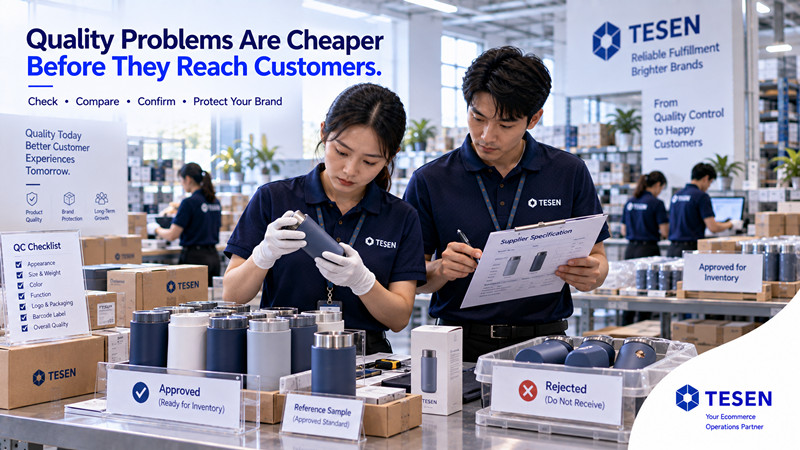
Many ecommerce brands treat quality control as a defensive activity. Something to use when defects appear. Something to strengthen after return rates increase. Something to review when customers start complaining. But growing Shopify brands eventually learn that quality control serves a much bigger purpose. It protects the consistency required for sustainable growth. At TESEN, we've found that qua...
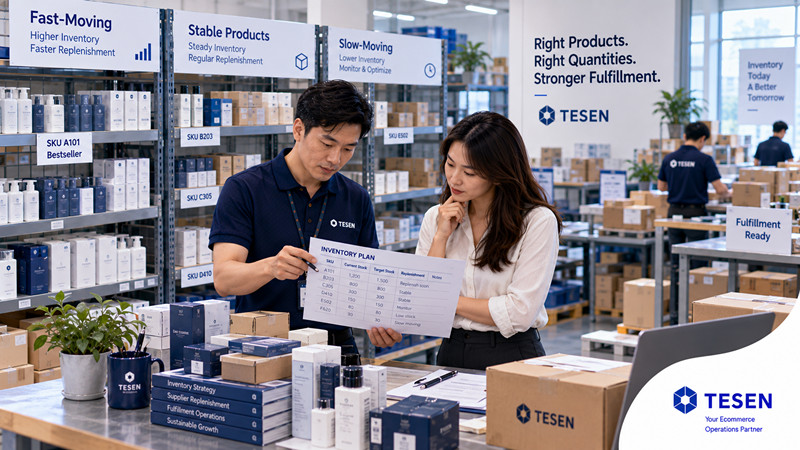
As ecommerce brands grow, inventory storage often appears to be a simple capacity problem. More products require more shelves. More orders require more inventory. More inventory requires a larger warehouse. But warehouse capacity is only one part of the problem. A Shopify brand can have thousands of units in storage and still experience stockouts, excess inventory, poor replenishment decisions, an...
For many ecommerce brands, product sourcing and fulfillment begin as separate decisions. A sourcing agent or factory helps find and manufacture the product. A warehouse stores inventory and ships customer orders. At a small scale, this can work. But as Shopify and DTC brands grow, the gap between sourcing and fulfillment often becomes an operational weakness. Production timelines change. Supplier ...
For many Shopify brands, the first reason to look for a fulfillment agent is simple: There are too many orders to manage manually. The brand needs someone to receive inventory, store products, pick and pack orders, and arrange shipping. At an early stage, that may be enough. But as an ecommerce business grows, fulfillment becomes connected to much more than order processing. Inventory needs to be ...
A customer who receives a defective product does not think about where the problem started. They do not know whether the issue came from the factory, packaging, inventory handling, or fulfillment. They simply know that the product did not meet their expectations. For ecommerce brands, this is why quality control should not be viewed only as an inspection process. Effective ecommerce quality contro...

 IPv6 network supported